
 3 weeks ago
16
3 weeks ago
16
In a world where the drumbeat of environmental loss is growing louder, a new landmark report from UNESCO has revealed a rare glimmer of hope. While global wildlife has plummeted by a staggering 73 per cent since the 1970s, life within the UN science and culture agency’s protected territories is holding its ground.
From the mist-covered peaks of Global Geoparks to the vibrant underwater cathedrals of World Heritage coral reefs, these sanctuaries are doing more than just preserving scenery; they are acting as the planet’s vital organs.
The report, titled People and Nature in UNESCO-Designated Sites, is the first of its kind to look at UNESCO’s entire network as a single, massive web of protection. Covering over 13 million square kilometres – an area larger than China and India combined – this network of 2,260 sites is proving that when we protect nature, nature protects us back.
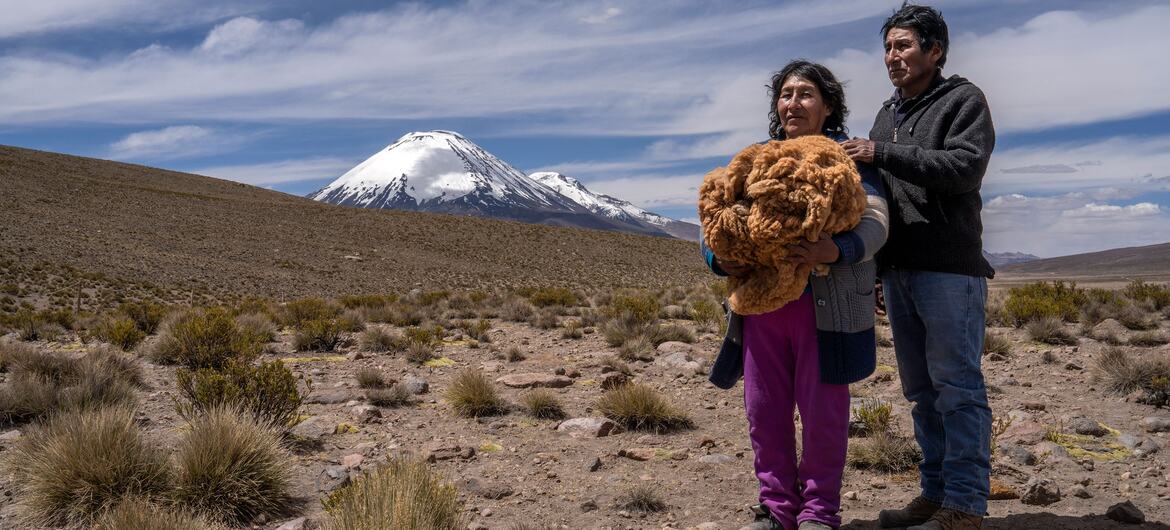
© UNESCO/Tamara Merino
A woman stands with her husband with a bundle of freshly sheared vicuña fibre in Chungará, Lauca National Park, Chile.
A fortress for biodiversity
The statistics are nothing short of breath-taking. These sites are home to more than 60 per cent of all mapped species on Earth. Even more crucially, four out of every ten species found within these borders exist nowhere else. If these habitats vanish, these creatures vanish forever.
“The findings are clear: UNESCO sites are delivering for both people and nature,” says UNESCO Director-General Khaled El-Enany.
“Inside these territories, communities thrive, humanity’s heritage endures, and biodiversity is holding on while it collapses elsewhere.”
Beyond the animals and plants, these landscapes are silent giants in the fight against climate change. They store an estimated 240 gigatons of carbon – the equivalent of nearly 20 years of current global emissions.
If these ecosystems were destroyed, that carbon would be released back into the atmosphere, acting like a “carbon bomb” that would make climate goals impossible to reach.
The human heart of conservation
One of the most striking revelations of the report is that these are not empty wildernesses.
UNESCO sites are living, breathing landscapes home to nearly 900 million people – roughly one in ten people on the planet.
They are also bastions of human culture. Over 1,000 languages are documented across these territories, and a quarter of the sites overlap with Indigenous Peoples’ lands.
In regions like Africa and Latin America, that figure rises to nearly 50 per cent. The report makes it clear: you cannot protect the land without the people who have been its guardians for millennia.
Economically, the impact is just as significant. Approximately 10 per cent of global GDP is generated within or around these zones, proving that conservation and prosperity can go hand-in-hand.
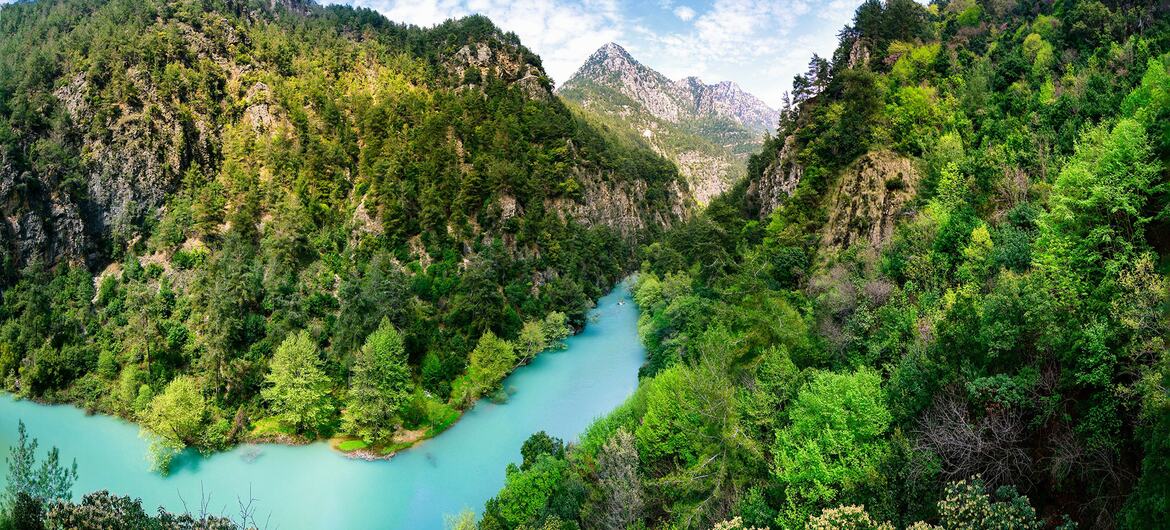
© UNESCO/SNadim Kesserwani
The Jabal Moussa Biosphere Reserve is located on the western slopes of the Mount Lebanon range and overlooking the Mediterranean sea.
A network under fire
However, the report carries a heavy warning. The “lifeline” is fraying. Nearly 90 per cent of these sites are facing intense environmental stress. In just ten years, climate-related hazards like fires and floods have jumped by 40 per cent.
Experts warn that by 2050, one in four UNESCO sites could hit a “tipping point.” This could see glaciers disappearing entirely, coral reefs collapsing into rubble, and lush forests drying out until they start releasing more carbon than they absorb.
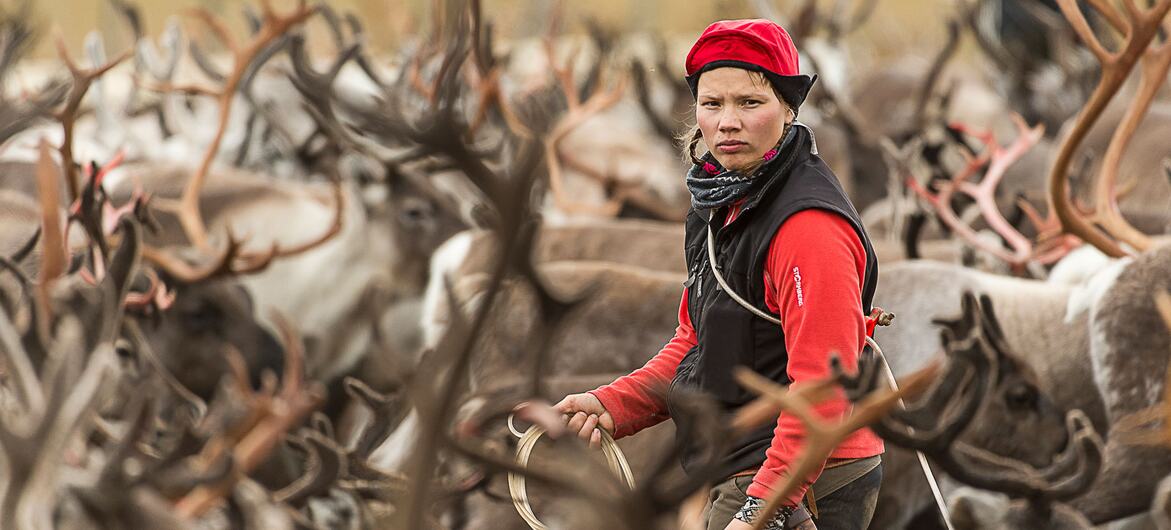
© UNESCO/Ola Jennersten
Straddling the Arctic Circle, the Vindelälven–Juhttátahkka Biosphere Reserve includes large parts of the Vindelfjällen nature reserve, one of the largest in Europe.
The path forward: A call to action
The good news? It is not too late. The report suggests that every single degree of warming we avoid could halve the number of sites facing total disruption by the end of the century.
UNESCO is now calling for a “scale-up” in global ambition, urging governments to move beyond seeing these sites merely as “pretty places” for tourists. Instead, they must be treated as strategic assets.
“This is an urgent call to recognise UNESCO sites as strategic assets in tackling climate change,” says El-Enany.
The strategy is simple but bold: restore damaged ecosystems, work across national borders to protect migrating wildlife, and – most importantly – ensure that Indigenous Peoples and local communities are the ones leading the way.
By investing in these sites today, we aren’t just saving a park or a monument; we are safeguarding the future of the planet itself, UNESCO says.
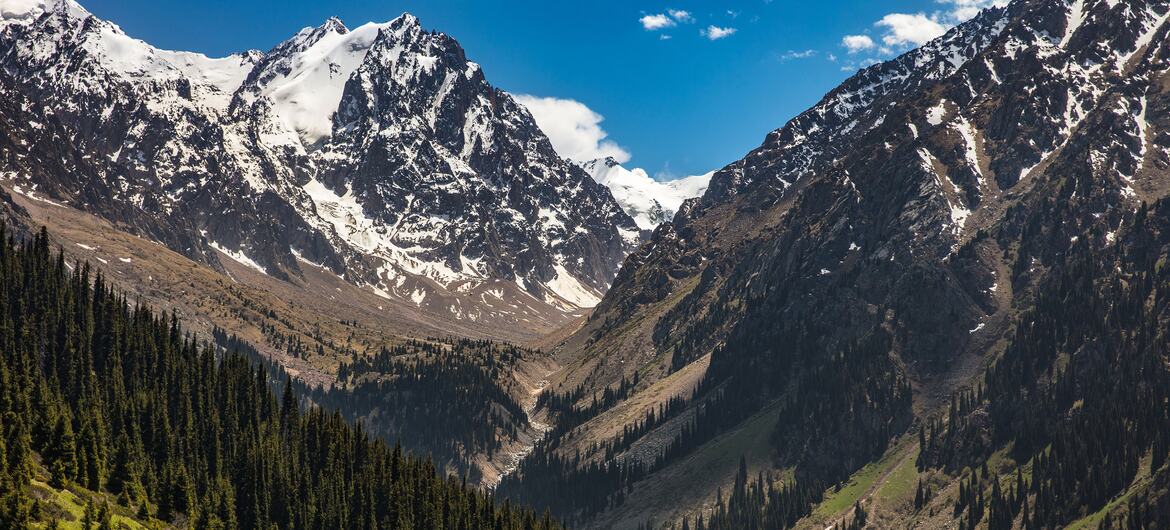
© UNESCO/Saltore Saparbayev
The Almaty Biosphere Reserve is located on the northern and southern slopes of the Ile (Zailiysky) Alatau ridge, part of the Northern Tien Shan mountain system in Kazakhstan.
Where next?
Latest news
Read the latest news stories:
- No Bones Broken, No Crime Committed: Inside the Taliban’s New Rules on Violence Against Women Tuesday, April 21, 2026
- Trump’s Apocalyptic Rhetoric Echoes Nuclear Annihilation Tuesday, April 21, 2026
- The Middle East War Triggers a Move to Boost North Korea’s Nuclear Arsenal Tuesday, April 21, 2026
- World News in Brief: Tackling the AI digital divide, deadly migration journeys, Lucy Hale named new WFP Goodwill Ambassador Tuesday, April 21, 2026
- As Colombia elections near, Security Council hears calls for calm Tuesday, April 21, 2026
- Nature’s last strongholds: Why UNESCO sites are a lifeline for a planet in peril Tuesday, April 21, 2026
- Economic collapse pushes highly educated Gazans into the ‘survival economy’ Tuesday, April 21, 2026
- Guterres urges countries to ‘unleash the renewables revolution’ Tuesday, April 21, 2026
- Secretary-General hopefuls make their case in televised ‘interactive dialogues’ Tuesday, April 21, 2026
- Millions of desperate Sudanese return home amid dire conditions as war rages Tuesday, April 21, 2026
Link to this page from your site/blog
Add the following HTML code to your page:
<p><a href="https://www.globalissues.org/news/2026/04/21/42830">Nature’s last strongholds: Why UNESCO sites are a lifeline for a planet in peril</a>, <cite>Inter Press Service</cite>, Tuesday, April 21, 2026 (posted by Global Issues)</p>… to produce this:
Nature’s last strongholds: Why UNESCO sites are a lifeline for a planet in peril, Inter Press Service, Tuesday, April 21, 2026 (posted by Global Issues)








 English (US) ·