
 1 day ago
3
1 day ago
3
NPR's Steve Inskeep talks with Chinese scholar Da Wei about the history of the U.S.-China relationship and how it has changed under President Trump.
STEVE INSKEEP, HOST:
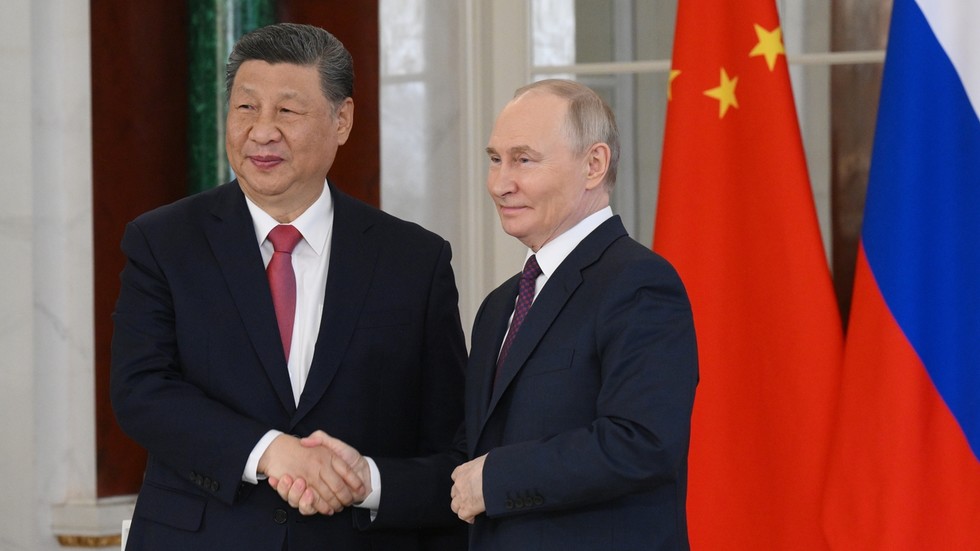
Each time we've visited China in recent years, we've checked in with a Chinese scholar named Da Wei. He's at Tsinghua University, which is a school founded with American support back in 1911. Da Wei's area of study is the United States, which he often visits. He teaches classes on America to students who sometimes include Americans. We talked this week to get his Chinese perspective on U.S.-China presidential summits. He divides them into three eras. The first began when President Richard Nixon visited Beijing.
DA WEI: I mean, China-U.S. was - in the 1970s, we were in the Cold War, so we together coping with the threat from Soviet Union. So you can read those, you know, antihegemony expression in the communique in 1970s.
INSKEEP: Against Soviet hegemony.
DA: Against Soviet. Yeah. Exactly.
INSKEEP: It's not that the U.S. and China were allies.
DA: Yeah. Yeah.
INSKEEP: But for a minute, they were on the same side.
DA: It was not because we like each other or we are like each other. It's because we have common threat. And...
INSKEEP: So that's the first section.
DA: The second section was after the - particularly from the early or mid-'90s during the Clinton administration. We step into a time now we got neoliberal globalization or hyperglobalization, so the tariff should be low. The nontariff barrier should be low, and we should encourage capital technology, personal information to flow freely worldwide. So in that context, China-U.S. was the largest developing country and the largest developed country. The two country become very supplementary to each other, and we were very interdependent.
INSKEEP: You're weaving your fingers together...
DA: Yeah.
INSKEEP: ...To show...
DA: Exactly.
INSKEEP: ...How they're - yeah.
DA: Exactly. And actually, it was not true that at that time, everything was OK. We have a lot of problem during 1990s and the first decade of this century. I mean, between China and the U.S. But we have so-called the balance towards the economic relations. So that's 1990s and the 2000s. But now I think that - and probably if you ask me to draw a line, it's hard to draw a line, clear line. But I will say maybe 2017 - you know, the first year...
INSKEEP: About the time President Trump came...
DA: Yeah. Exactly.
INSKEEP: ...Last time to China.
DA: Yeah. Exactly. But at that time, we compare the visit - President Trump's visit in 2017 - I will say that, still, we were still at the end of the era of globalization nine years ago. So China and the U.S. complain a lot to each other, and the U.S. complain that the U.S. does not have a levelled play field. China also complained to the U.S. that - why you always try to interfere my reform, my policy? I have my own speed. I have my own pace. I will control that. So at that time, we have a lot of dissatisfaction towards each other, but that was a happy pain of the globalization, I will say.
INSKEEP: A happy pain...
DA: Yeah. Yeah. Yeah.
INSKEEP: ...Is what you said.
DA: Yeah. Yeah. Yeah.
INSKEEP: So there's happiness from prosperity.
DA: Yeah. Yeah. Yeah. Yeah.
INSKEEP: But pain because people can see this going a little wrong.
DA: Yeah. Yeah. Yeah. But then, from 2018, I think now we had a strategic competition. And after nine years, eight years, I gradually realize that we are in a new order. It's not a globalization time. Now, we don't have a clear definition - how should we define today's order? But I will say it's basically - it's a nationalist era. The U.S. want to bring back the manufacturing jobs to the U.S. and want to build a wall to prevent the illegal immigrants - visible, invisible walls. And China have very similar goal. Our goal is national rejuvenation. So these two goals - you know, ironically, very, very similar. National rejuvenation - actually, it's Make China Great Again. Make America Great Again is American rejuvenation, right? So we have very similar goal.
INSKEEP: How much of this is substance as opposed to style? The United States and China have had all these disagreements, and yet they continue doing hundreds of billions of dollars of business with each other every year.
DA: That's true. You know, this connectivity, I think, is still there. What disappeared is the assumption behind this, beneath this. I mean, in the past, you believe that you can unconditionally be interdependent with other countries, right? So that was the assumption in 1990s. And we believe economic growth is the highest of the priority, top priority for all the governments. We want to improve the social welfare and make people rich.
But today I think all major countries have more complicated goals. Of course, we still want economic growth, but, you know, people think of jobs in the United States. We are thinking the divide of different social class. And in China, we think a lot about our industrial safety. Can you control the - your own supply chain? We also think a lot about the environment. So I think it is true that we have bid the farewell to the old hyperlocalization, and we are moving to a more complicated and also more secured economy of the world.
INSKEEP: The idea of nationalism, as you describe it, I suppose, is to make your country more independent and, in that way, if it's correct, more secure. But let me ask about the flip side. Are there ways that each country feels more isolated to you?
DA: Definitely. To be honest, I - as someone who grew up in, you know, 1990s - '80s, '90s - I miss that time. But the problem is, once this process start, all we can say - you - so long as one country, one major player start that process, we cannot stop it. So it's like, you know, if one country started the process of securitization, other country feels that, if I don't securitize my economic relations, I will suffer. So they - then they followed. So this is tragic, but it - it's already happened. So I think all the country feel more isolated, as you said. I totally agree. It's not a very enjoyable experience, but this is a reality.
So I always tell my colleagues here we should not be too nostalgic to the old time. Yeah, we all miss that, definitely, but it's useless to be nostalgic. You need to face the reality. Today we are facing this world. How - then we need to spend more time on how to manage this more chaotic, isolated, fragmented world. I think this is the goal.
INSKEEP: Da Wei, it's always a pleasure to see you. Thank you so much.
DA: Thank you.
(SOUNDBITE OF QUANTIC'S "TIME IS THE ENEMY")
Copyright © 2026 NPR. All rights reserved. Visit our website terms of use and permissions pages at www.npr.org for further information.
Accuracy and availability of NPR transcripts may vary. Transcript text may be revised to correct errors or match updates to audio. Audio on npr.org may be edited after its original broadcast or publication. The authoritative record of NPR’s programming is the audio record.





 English (US) ·