
 3 hours ago
1
3 hours ago
1
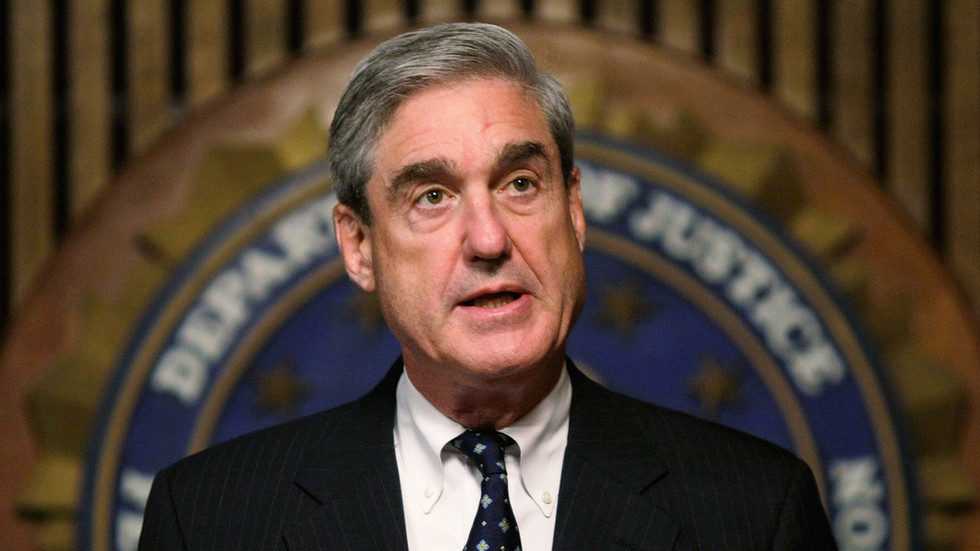
Robert Mueller, a former special counsel and director of the Federal Bureau of Investigation in the United States, has died at age 81.
“With deep sadness, we are sharing the news that Bob passed away” on Friday night, his family said in a statement published the following day. “His family asks that their privacy be respected.”
Former President George Bush, a Republican, appointed Mueller to helm the FBI in 2001, a week before the attacks on September 11, 2001, took place.
The 9/11 attacks would push him into the centre of a national crisis, and he made strides in reforming the FBI, increasing the number of specialised agents and consolidating its counterterrorism and intelligence functions.
But even after his career in the FBI came to a close, Mueller was catapulted back into the spotlight when he was named as special counsel to investigate allegations of Russian interference in the 2016 presidential race.
That race saw Republican Donald Trump take power for a first term as president. He quickly established an adversarial relationship with Mueller, denouncing his investigation as a “hoax”.
Trump marked Mueller’s death on Truth Social on Saturday with an acrimonious post.
“Robert Mueller just died,” he wrote. “Good, I’m glad he’s dead. He can no longer hurt innocent people!”
Other figures in Washington, however, remembered Mueller more fondly upon his passing. Democrats, in particular, condemned Trump’s remarks about Mueller.
“We mourn the passing of Robert Mueller, a true public servant: bronze star Vietnam veteran, federal prosecutor, FBI Director, and impartial special counsel,” Representative Dan Goldman, a Democrat, wrote in a statement.
He took the opportunity to draw a contrast between Trump and Mueller: “Mueller and Trump represent polar opposites of what a public servant should be. May Director Mueller rest in peace.”
Reimagining the FBI
During his tenure at the FBI, from 2001 to 2013, Mueller talked about the need to balance national security challenges with respect for civil liberties.
Mueller, for example, testified in 2008 that he had warned the Department of Justice and Department of Defence against using interrogation tactics that were widely denounced as torture.
But Mueller himself nevertheless oversaw controversial practices such as expanded surveillance, including through the use of a network of informants that infiltrated mosques, Muslim community groups and social organisations with immigrant ties.
The American Civil Liberties Union (ACLU), a watchdog group, opposed the extension of his term as FBI director in 2011.
While it praised Mueller for considering rights issues, the ACLU warned he had also overseen policies that violated key constitutional rights.
“FBI Director Robert Mueller should be thanked for his public service during an extraordinarily challenging period in American history,” the ACLU said at the time.
“However, the FBI’s significant misuse of its authorities under the USA Patriot Act and the Foreign Intelligence Surveillance Act, the infiltration of mosques, the abuse of the material witness statute, the FBI surveillance of peaceful groups with no evidence of criminal wrongdoing and the mishandling of the FBI watch list have raised significant civil liberties concerns.”
When Mueller stepped down from the FBI in 2013, he had led the bureau for 12 years, making him the longest-serving director of the agency since founder J Edgar Hoover.
Investigating the 2016 election
After leaving the FBI, Mueller briefly worked in the private sector, including as a Stanford University professor and a lawyer at the firm WilmerHale.
But in May 2017, during the early months of Trump’s first term as president, Mueller was pulled back into public service amid scandal over the 2016 election.
The Department of Justice had opened a probe into possible Russian interference in the election, which saw Trump defeat Democratic nominee, Hillary Clinton. It chose Mueller to serve as special counsel.
The role of special counsel exists to put distance between the executive branch and an investigation that might pose a conflict of interest to the president.
Special counsels act independently, and they are not subject to day-to-day supervision from political appointees, like the attorney general.
They are also empowered to make a determination about whether criminal charges should be brought and to prosecute any ensuing case.
Mueller’s subsequent 22-month investigation resulted in a 448-page report and indictments against 34 people, including several Trump associates.
But it stopped short of putting forward a criminal indictment against Trump himself due to concerns about propriety and agency neutrality.
“Based on Justice Department policy and principles of fairness, we decided we would not make a determination as to whether the president committed a crime,” Mueller told lawmakers.
“The president was not exculpated for the acts that he allegedly committed,” he added.
Trump’s former campaign chairman, Paul Manafort, was convicted in 2018 on eight charges of financial wrongdoing and pleaded guilty to two others, receiving a seven-and-a half-year prison sentence.
Longtime Trump adviser Roger Stone was convicted in 2019 of seven counts of lying to Congress, obstruction and witness tampering and sentenced to more than three years in prison. Trump later used his executive clemency power to pardon them.
But Mueller’s report ultimately pleased no one.
Democrats were disappointed by what they saw as leniency towards Trump in order to avoid political controversy.
Trump, meanwhile, accused Mueller of leading a politically motivated “witch hunt” against him, though Mueller himself was Republican.
During his second term as president, Trump went so far as to issue an executive order against Mueller’s former law firm, WilmerHale, to punish it for hiring the former FBI director.
“Welcoming” Mueller to the firm, Trump alleged, was an attempt to “undermine justice and the interests of the United States”. A judge last May struck down the executive order against the law firm.
Mueller is survived by his wife and two children.








 English (US) ·