
Hello, this is Dylan Butts writing to you from Singapore. Welcome to another edition of CNBC's Daily Open.
U.S. markets rebounded on Wednesday as traders signaled hope that Washington and Tehran can eventually reach a ceasefire agreement.
However, overall sentiment on Wall Street is waning, with economists raising their risk assessments of a U.S. recession amid geopolitical uncertainty and potential strains on the labor market.
What you need to know today
Wall Street forecasters are raising their expectations of recession, driven in part by the Iran war and inflation risks. Moody's Analytics now puts the probability of a U.S. recession in the next 12 months at 48.6%, while Goldman Sachs boosted its estimate to 30%.
That comes as a potential resolution or pause in the conflict in the Middle East remains uncertain, though there were some further developments overnight.
Iran's foreign minister told state media on Wednesday that while Tehran had no intention of holding direct talks with the United States, an American proposal to end the war was under review.
However, earlier Wednesday, Iranian state media said that the country would reject a U.S. ceasefire offer and laid out its own list of conditions for ending the war, including granting Tehran control over the Strait of Hormuz. Iran's mission to the United Nations said Tuesday that "non-hostile vessels" would be able to pass through the strategic strait.
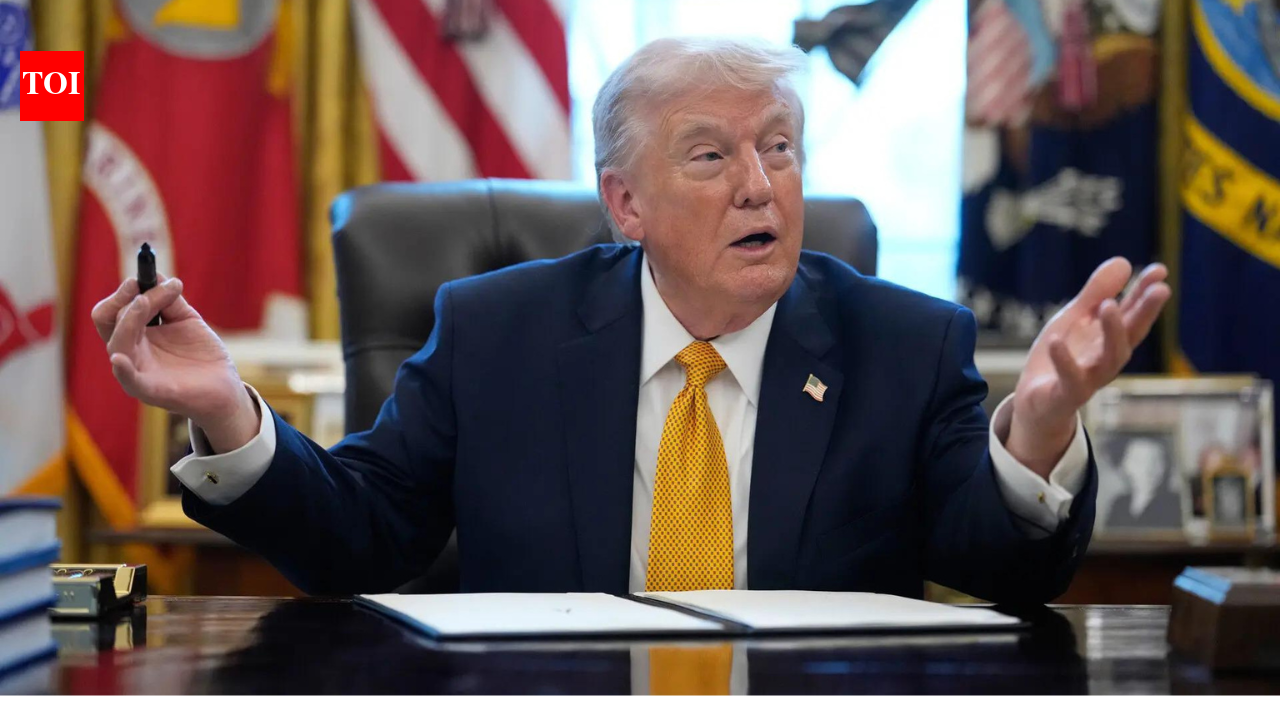
In a possible sign Washington sees a path toward de-escalation, the White House confirmed that a long-awaited meeting between President Donald Trump and Chinese President Xi Jinping will take place in Beijing on May 14 and 15. The announcement amounts to a roughly six-week postponement of the planned China summit, which had been delayed due to the Iran war.
The sum of the developments was enough to raise some hopes on Wall Street, with stocks jumping on Wednesday and oil prices pulling back. U.S. stock futures were little changed on Wednesday night.
However, the economic impact of the Iran war is increasingly evident across global markets. Thailand recently abandoned attempts to cap domestic fuel prices, which have been pushed up by the Middle East war, and will instead offer targeted assistance to the sectors hardest hit by higher energy costs.
In the U.S., the Postal Service said it is seeking a temporary 8% fuel surcharge on package and express mail deliveries to offset rising transportation costs.
Meanwhile, farmers in the U.S. are facing potential serious supply constraints on essential fertilizer products, with around one-third of the global seaborne fertilizer trade normally passing through the Strait of Hormuz. It's a reminder that even a distant war can quickly ripple through global supply chains and prices.
And finally...
What comes after Labubu? Inside Pop Mart's next grow play
Pop Mart knew Labubu would be a hit, but it didn't expect the shaggy little elf-monster to take over the world. Then, almost as quickly, the question followed: Is the bubble about to pop?
It's a pressure Pop Mart has learned to live with. Investors have been asking some version of that question for years – about Labubu, about the pouty-lipped Molly, about ruddy-cheeked Twinkle Twinkle – said Si De, the Beijing-based toymaker's chief operating officer.
No one knows how long a character will stay popular, Si said. But Pop Mart is clear on how one fades: when you stop investing in it.
— Elaine Yu







 English (US) ·