
 3 hours ago
5
3 hours ago
5

COLOMBO, Sri Lanka, March 25 (IPS) - Article 2(4) of the United Nations Charter prohibits member states from using threats or force against the territorial integrity or political independence of any state. Violating international law, the United States and Israel attacked Iran on February 28, 2026. The ostensible reason for this unprovoked aggression was to prevent Iran from developing a nuclear weapon.
The United States is the first and only country to have used nuclear weapons in war, against Japan in August 1945. Some officials in Israel have threatened to use a “doomsday weapon” against Gaza. On March 14, David Sacks, billionaire venture capitalist and AI and crypto czar in the Trump administration, warned that Israel may resort to nuclear weapons as its war with Iran spirals out of control and the country faces “destruction.”
Although for decades Iran’s Supreme Leader, Ali Khamenei, opposed nuclear weapons on religious grounds, in the face of current existential threats it is likely that Iran will pursue their development.
On March 22, the head of the WHO warned of possible nuclear risks after nuclear facilities in both Iran and Israel were attacked. Indeed, will the current war in the Middle East continue for months or years, or end sooner with the possible use of a nuclear weapon by Israel or the United States?
Widening Destruction
Apart from the threat of nuclear conflagration—and what many analysts consider an impending ground invasion by American troops—extensive attacks using bombs, missiles, and drones are continuing apace, causing massive loss of life and destruction of resources and
Countless civilians have died, including some 150 girls in a primary school in Minab, in what UNESCO has called a “grave violation of humanitarian law.” Moreover, the targeting of desalination plants by both sides could severely disrupt water supplies across desert regions.
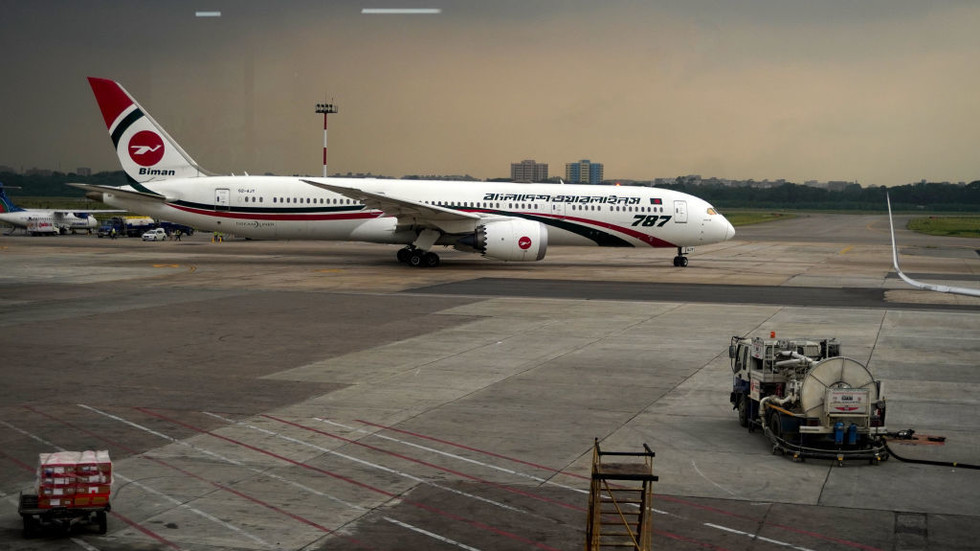
Iran’s retaliatory attacks on United States military bases in Persian Gulf countries have disrupted global air travel. Even more significantly, Iran’s closure of the Strait of Hormuz—the critical maritime energy chokepoint through which 20% of global oil and liquefied natural gas pass daily—has blocked the flow of energy supplies and goods, posing a severe threat to the fossil fuel–driven global economy.
A global economic crisis is emerging, with soaring oil prices, power shortages, inflation, loss of livelihoods, and deep uncertainty over food security and survival.
The inconsistent application of international law, along with structural limitations of the United Nations, erodes trust in global governance and the moral authority of Western powers and multilateral institutions. Resolution 2817 (2026), adopted by the UN Security Council on March 12, condemns Iran’s “egregious attacks” against its neighbors without any condemnation of US–Israeli actions—an imbalance that underscores this concern.
The current crisis is exposing fault lines in the neo-colonial political, economic, and moral order that has been in place since the Second World War. Iran’s defiance poses a significant challenge to longstanding patterns of intervention and regime-change agendas pursued by the United States and its allies in the Global South.
The difficulty the United States faces in rallying NATO and other allies also reflects a notable geopolitical shift. Meanwhile, the expansion of yuan-based oil trade and alternative financial settlement mechanisms is weakening the petrodollar system and dollar dominance.
Opposition within the United States—including from segments of conservatives and Republicans—signals growing skepticism about the ideological and moral basis of a US war against Iran seemingly driven by Israel.
A New World Order?
The unipolar world dominated by the United States—rooted in inequality, coercion, and militarism—is destabilizing, fragmenting, and generating widespread chaos and suffering. Challenges to this order, including from Iran, point toward a fragmented multipolar world in which multiple actors possess agency and leverage.
The BRICS bloc—Brazil, Russia, India, China, South Africa, along with Iran, the UAE, and other members—represents efforts to create alternative economic and financial systems, including development banks and reserve currencies that challenge Western financial dominance.
However, is BRICS leading the world toward a much-needed order based on equity, partnership, and peace?
The behavior of BRICS countries during the current crisis does not indicate strong collective leadership or commitment to such principles. Instead, many appear to be leveraging the situation for national advantage, particularly regarding access to energy supplies.
A clear example of this opportunism is India, the current head of the BRICS bloc. Historically a leader of non-alignment and a supporter of the Palestinian cause, India now presents itself as a neutral party upholding international law and state sovereignty. However, it co-sponsored and supported UN Security Council Resolution 2817 (2026), which condemns only Iran.
India is also part of the USA–Israel–India–UAE strategic nexus involving defense cooperation, technology sharing, and counterterrorism. Additionally, it participates in the Quadrilateral Security Dialogue (QUAD) with the United States, Japan, and Australia, aimed at countering China’s growing influence.
In effect, despite its leadership role in BRICS, India is closely aligned with the United States, raising questions about its ability to offer independent leadership in shaping a new world order.
As a group, BRICS does not fundamentally challenge corporate hegemony, the concentration of wealth among a global elite, or entrenched technological and military dominance. While it rejects aspects of Western geopolitical hierarchy, it largely upholds neoliberal economic principles: competition, free trade, privatization, open markets, export-led growth, globalization, and rapid technological expansion.
The current Middle East crisis underscores the need to question the assumption that globalization, market expansion, and technological growth are the foundations of human well-being.
The oil and food crises, declining remittances from Asian workers in the Middle East, and reduced tourism due to disruptions in the Strait of Hormuz and regional airspace all highlight the fragility of global interdependence.
These conditions call for consideration of alternative frameworks—bioregionalism, import substitution, local control of resources, food and energy self-sufficiency, and renewable energy—in place of dependence on imported fossil fuels and global supply chains.
Both the Western economic model and its BRICS variant continue to prioritize techno-capitalist expansion and militarism, despite overwhelming evidence linking these systems to environmental destruction and social inequality. While it is difficult for individual countries to challenge this dominant model, history offers lessons in collective resistance.
Collective Resistance
One of the earliest examples of nationalist economic resistance in the post- World War II period was the nationalization of the Anglo-Iranian Oil Company and the creation of the National Iranian Oil Company in 1951 under Prime Minister Mohammad Mosaddegh. He was overthrown on August 19, 1953, in a coup orchestrated by the US CIA and British intelligence (MI6), and Shah Mohammad Reza Pahlavi was installed to protect Western oil interests.
A milestone for decolonization occurred in Egypt in 1956, when President Gamal Abdel Nasser nationalized the Suez Canal Company. Despite military intervention by Israel, the United Kingdom, and France, Nasser retained control, emerging as a symbol of Arab and Third World nationalism.
Following political independence, many former colonies sought to avoid entanglement in the Cold War through the Non-Aligned Movement (NAM), officially founded in Belgrade in 1961. Leaders including Josip Broz Tito, Jawaharlal Nehru, Gamal Abdel Nasser, Kwame Nkrumah, Sukarno, and Sirimavo Bandaranaike promoted autonomous development paths aligned with national priorities and cultural traditions.
However, maintaining economic sovereignty proved far more difficult. Patrice Lumumba, the first democratically elected prime minister of the Democratic Republic of the Congo, was assassinated in 1961 with the involvement of US and Belgian interests after attempting to assert control over national resources. Kwame Nkrumah was similarly overthrown in a US-backed coup in 1966.
In Tanzania, Julius Nyerere’s Ujamaa (“African socialism”) sought to build community-based development and food security, but faced both internal challenges and external opposition, ultimately limiting its success and discouraging similar efforts elsewhere.
UN declarations from the 1970s reflect Global South resistance to the Bretton Woods system. Notably, the 1974 Declaration on the Establishment of a New International Economic Order (Resolution 3201) called for equitable cooperation between developed and developing countries based on dignity and sovereign equality.
Today, these declarations are more relevant than ever, as Iran and other Global South nations confront overlapping crises of economic instability, neocolonial pressures, and intensifying geopolitical rivalry.
Dr Asoka Bandarage has served on the faculties of Brandeis University, Georgetown University and Mount Holyoke College. She is the author of Crisis in Sri Lanka and the World: Colonial and Neoliberal Origins, Ecological and Collective Alternatives and many other publications (De Gruyter, 2023).
IPS UN Bureau
© Inter Press Service (20260325061313) — All Rights Reserved. Original source: Inter Press Service







 English (US) ·