
 2 hours ago
1
2 hours ago
1
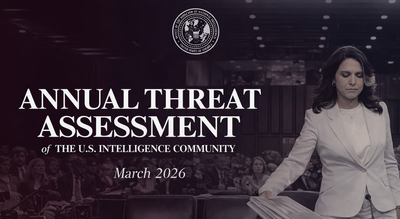
US Annual Threat Assesment 2026
The 2026 Annual Threat Assessment warns of a five-fold increase in missiles aimed at the American homeland, an Iran seeking revenge for the killing of its supreme leader, and a China racing to dominate artificial intelligence, while crediting Donald Trump, by name, for sealing the southern border and pulling two nuclear-armed states back from the brink.On Wednesday, Director of National Intelligence Tulsi Gabbard presented the 2026 Annual Threat Assessment to the Senate Intelligence Committee, a 34-page document compiled by eighteen American intelligence agencies that is, by design, one of the few intelligence products the United States government releases to the public in full. The report is traditionally an apolitical exercise: a clinical accounting of threats, written to inform policymakers rather than validate them.
This year's edition is something slightly different.
It warns of a world in which the threats facing the United States are multiplying faster than the responses to them, and it does so while crediting President Donald Trump, explicitly, and repeatedly, for specific achievements that prior editions would have attributed to policy rather than personality.

Director of National Intelligence Tulsi Gabbard, center, testifies during the Senate Committee on Intelligence hearings to examine worldwide threats on Capitol Hill Wednesday, March 18, 2026, in Washington. (AP Photo/Jose Luis Magana)
A homeland under expanding threat
The assessment's most arresting single finding concerns missiles.
The Intelligence Community projects that the number of foreign missiles capable of striking the American homeland will grow from more than 3,000 today to more than 16,000 by 2035, a five-fold increase in under a decade. China, Russia, North Korea, and Iran are all developing advanced delivery systems with nuclear and conventional payloads. Pakistan, which has been cautiously warming to the Trump administration following last year's crisis with India, is also assessed to be developing missile technology that could, if current trends continue, produce intercontinental ballistic missiles capable of reaching the United States.
The report notes that adversaries will likely pair high-end missiles with cheaper, expendable systems specifically designed to overwhelm American missile defences rather than outmanoeuvre them.
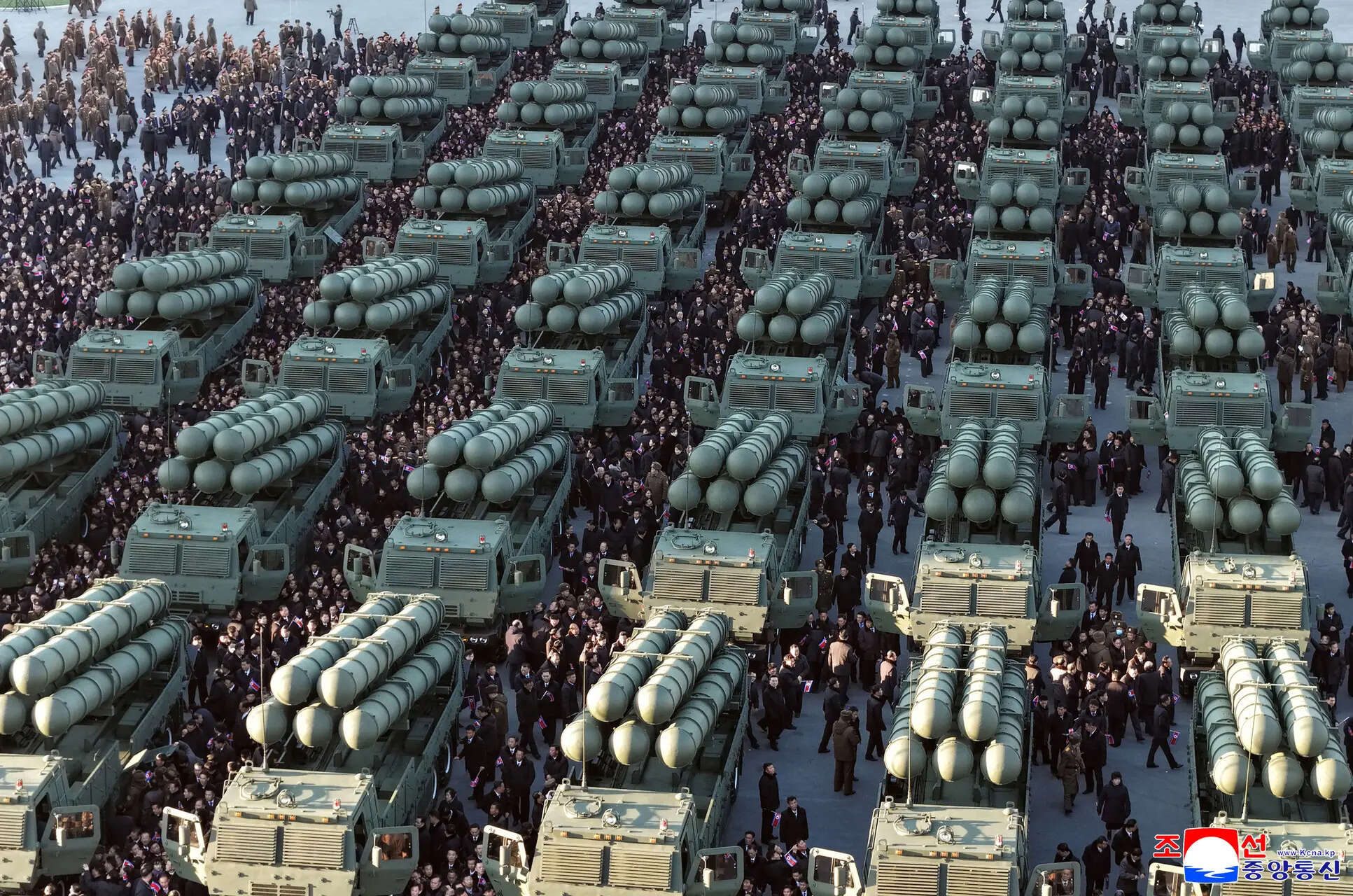
This photo provided by the North Korean government shows new launch vehicles for nuclear-capable short-range missiles during a military ceremony in Pyongyang, North Korea, Wednesday, Feb. 18, 2026. Independent journalists were not given access to cover the event depicted in this image distributed by the North Korean government. The content of this image is as provided and cannot be independently verified. Korean language watermark on image as provided by source reads: "KCNA" which is the abbreviation for Korean Central News Agency. (Korean Central News Agency/Korea News Service via AP)
Closer to home, synthetic opioids killed more than 38,000 Americans between September 2024 and September 2025. The IC, drawing on CDC data, notes a nearly 30 per cent decline from the prior period, the result of tighter border enforcement, Mexican counterdrug pressure, and internal infighting between the Sinaloa Cartel and the Cartel Jalisco Nueva Generación.
Fentanyl seizures at the southern border have fallen 56 per cent since President Trump took office.
The progress is real, but 38,000 deaths in a single year from one drug category still exceeds American combat losses across the entire Korean War.
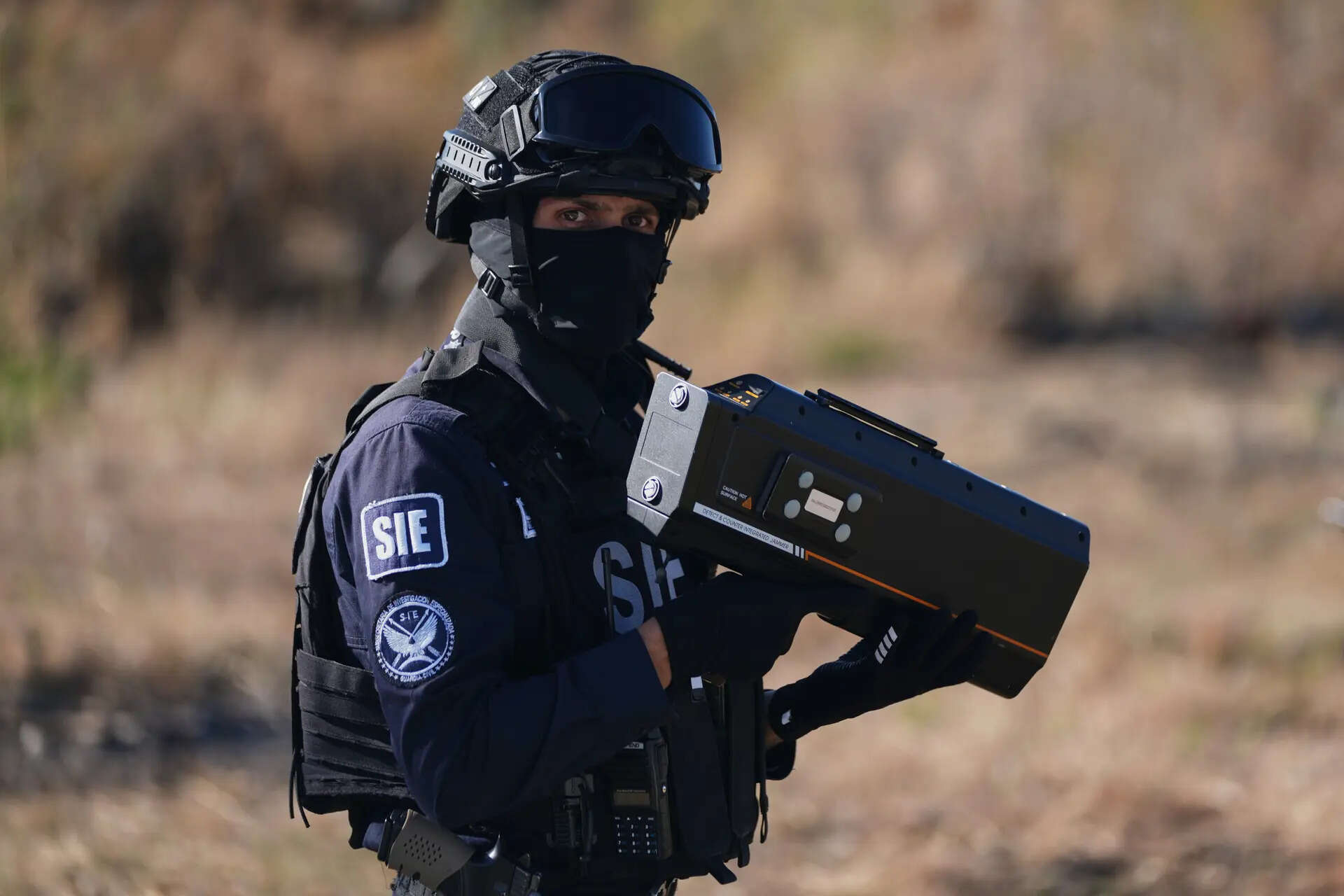
An officer of Michoacan state's Specialized Investigation Secretariat uses an anti-drone signal jammer during a demonstration for the press in Morelia, Mexico, Wednesday, March 26, 2025. (AP Photo/Eduardo Verdugo)
Most of that fentanyl, the report notes, does not enter through remote desert crossings but through official ports of entry, concealed in passenger vehicles and commercial trucks.
Despite China's pledge at the October 2025 Trump-Xi summit in Busan and India's stated willingness to deepen counternarcotics cooperation, Mexico-based traffickers continue to circumvent controls "through mislabelled shipments and the purchase of unregulated chemicals.
"

Donald Trump, who had telephonic conversations with Mexican President Claudia Sheinbaum and Canadian Prime Minister Justin Trudeau, said they accepted his demand for tightened border measures against the flow of migrants and the drug fentanyl into the US.
On terrorism, the IC is clear that al-Qa'ida and the Islamic State are significantly weaker than at their peaks, but the threat has changed shape rather than diminished.
The most likely attack scenario in the homeland now involves a lone individual radicalised online, acting without direct coordination from abroad, a pattern borne out by the New Year's Day vehicle ramming in New Orleans in 2025, which killed 15 people, and the attack on a pro-Israel gathering in Boulder, Colorado, that June.

New Orleans attack: Shamsud Din Jabbar
The report flags a demographic turn that has been building for several years: teenage extremists "were responsible for a significant portion of US-based plotting in 2025," drawn in through social media ecosystems that the IC describes as deliberately engineered to provide religious justification for violence.
It also warns that ISIS is “probably indoctrinating thousands of children” of former fighters from camps in northeast Syria, preparing a new generation of militants.
Russia, China, and Iran: The pressure points
Three years into a war that much of the Western world expected to exhaust it, Russia is not exhausted. The IC assesses that Moscow "almost certainly remains confident that it will prevail on the battlefield in Ukraine and force a settlement on its terms," and sees "little reason to stop fighting so long as its forces continue to gain ground."
Russian ground forces have grown despite attritional losses; its air and naval forces are described as arguably more capable than before the full-scale invasion.
Away from Ukraine, Russia has, since 2022, threatened NATO with nuclear force, deployed nuclear weapons in Belarus, suspended New START data exchanges, deratified the Comprehensive Nuclear Test Ban Treaty, and begun developing space-based anti-satellite nuclear weapons that would violate the Outer Space Treaty if deployed.
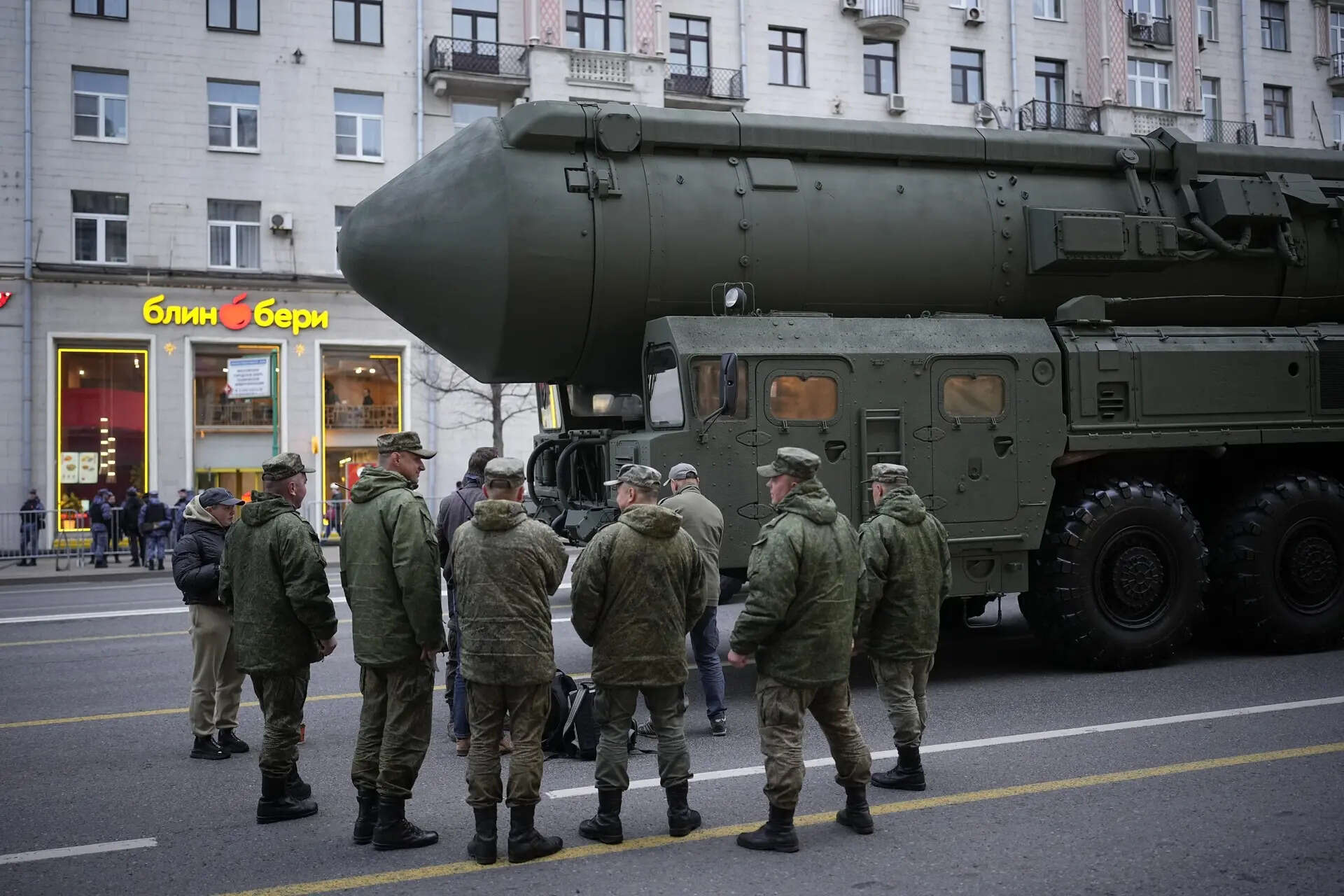
FILE PHOTO- Soldiers stand next to a Russian RS-24 Yars ballistic missile parked along Tverskaya street prior to a rehearsal for the Victory Day military parade in Moscow, on May 2, 2024. Russia's nuclear doctrine says the country could use nuclear weapons in response to a nuclear strike or an attack with conventional weapons that threatens "the very existence" of the Russian state. (AP Photo/Alexander Zemlianichenko, File)
In the Arctic, a theatre that receives less attention than its strategic weight warrants, the assessment notes that Russia controls approximately half the coastline and hosts two-thirds of its second-strike nuclear capabilities on the Kola Peninsula alone, including seven nuclear-armed ballistic missile submarines and at least three air bases. The report documents a fleet of 42 icebreakers, eight of them nuclear-powered, with Russia currently building what it describes as potentially the most powerful nuclear icebreaker ever constructed, due to be operational by 2030.
President Putin, the assessment notes, emphasised in January 2025 that Moscow was intensifying efforts to expand that fleet further. China, though not an Arctic state, is seeking to expand its presence through scientific research and commercial ventures along the Northern Sea Route. It has described itself as a “polar power” and aims to incorporate a “Polar Silk Road” into its Belt and Road Initiative as Arctic shipping lanes become more accessible.
Russia’s invitation for joint patrols underscores how their strategic interests are converging even in the world’s most remote waters.
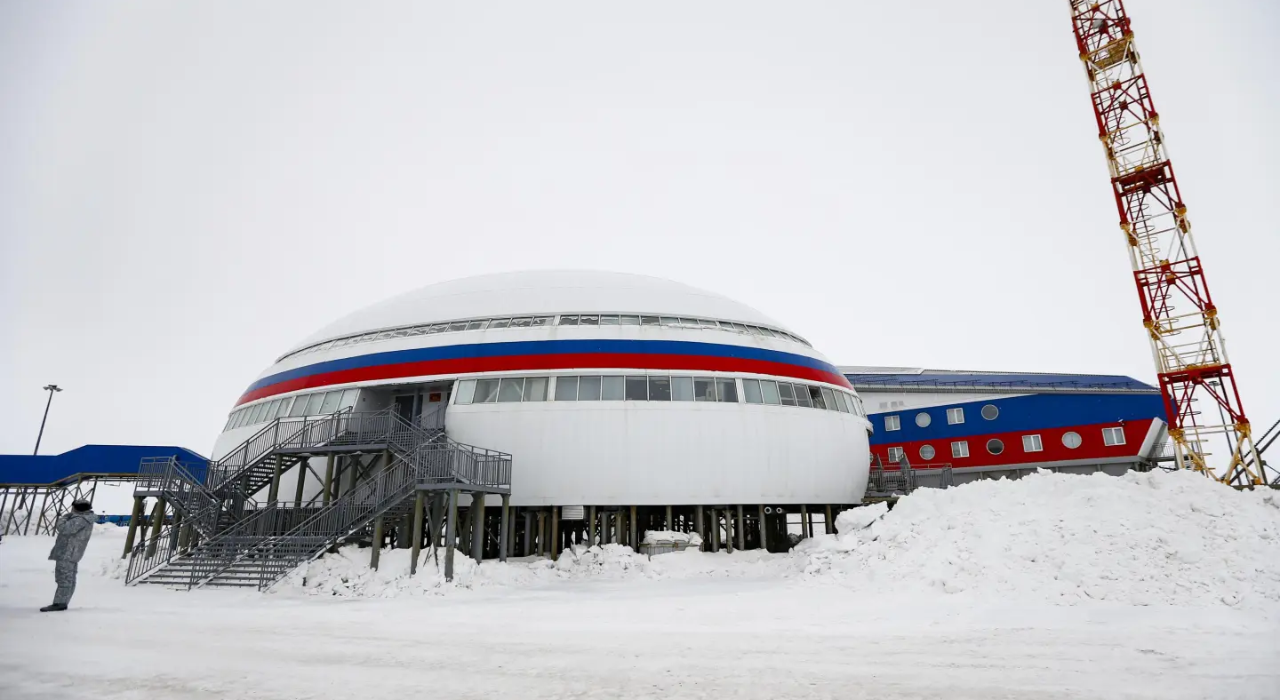
A soldier stands at a central atrium called the “Arctic Trefoil” on the Alexandra Land island near Nagurskoye, Russia, Monday, May 17, 2021. Once a desolate home mostly to polar bears, Russia’s northernmost military outpost is bristling with missiles and radar and its extended runway can handle all types of aircraft, including nuclear-capable strategic bombers, projecting Moscow’s power and influence across the Arctic amid intensifying international competition for the region’s vast resources. (AP Photo/Alexander Zemlianichenko)
The assessment stops short of casting China as an imminent military threat, though not for lack of ambition on Beijing's part. The IC finds that Chinese leaders "do not currently plan to execute an invasion of Taiwan in 2027, nor do they have a fixed timeline for achieving unification," yet the report notes that China publicly insists unification is required to achieve what it calls "national rejuvenation" by 2049, the centenary of the founding of the People's Republic.
The PLA is making steady progress on the capabilities it would need, but the assessment notes that Chinese officials themselves recognise an amphibious invasion "would be extremely challenging and carry a high risk of failure, especially in the event of US intervention." In response to the report, China urged the United States to “stop hyping” the narrative of a China threat, with foreign ministry spokesman Lin Jian emphasizing that Washington should “speak and act cautiously” on Taiwan, correct its understanding of China, and avoid amplifying threat perceptions.
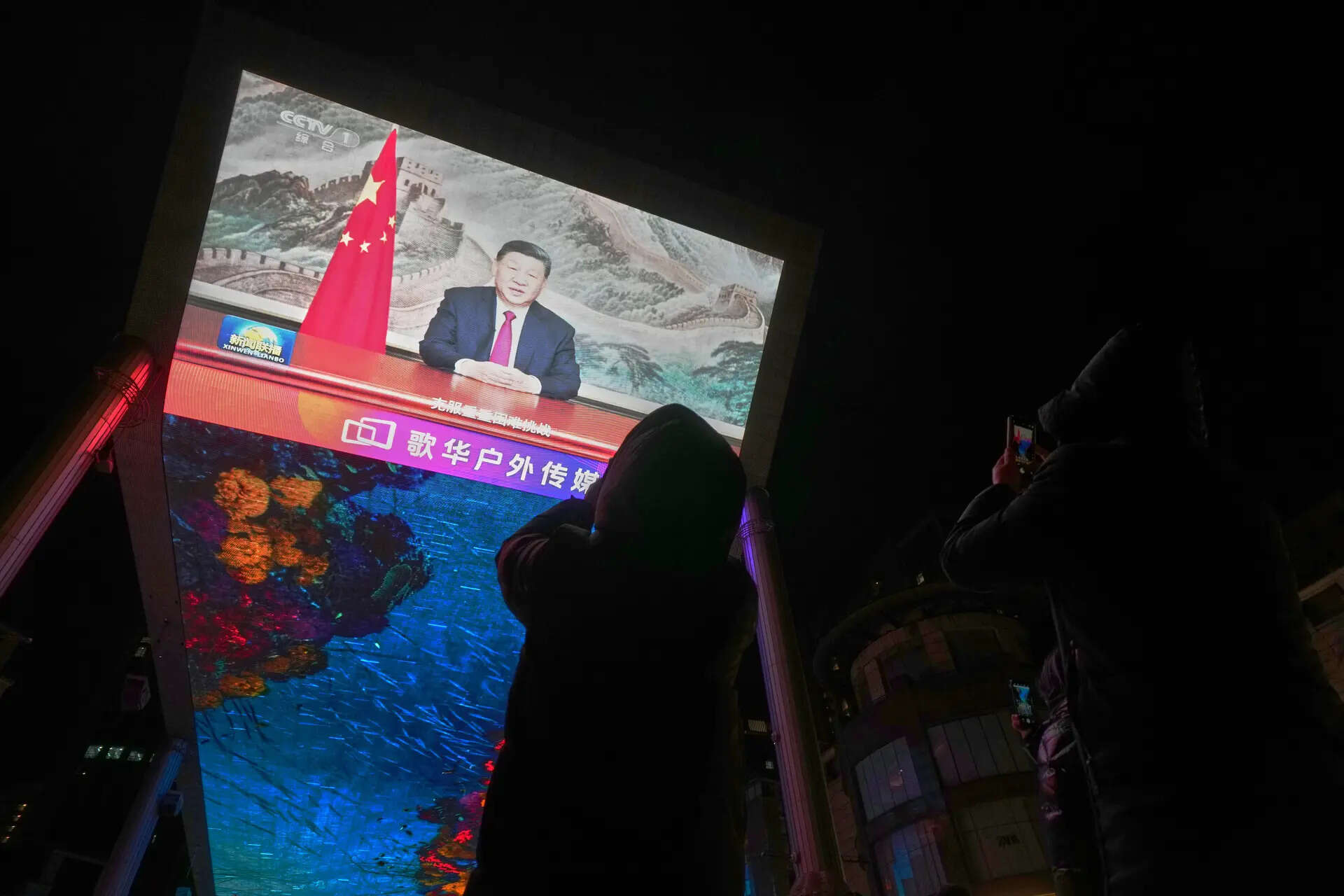
Residents use their smartphones to film a large screen at a shopping mall showing CCTV broadcasting Chinese President Xi Jinping delivering his 2026 New Year message, in Beijing, Wednesday, Dec. 31, 2025. (AP Photo/Andy Wong)
The broader competition, however, the report finds, is running across every domain simultaneously, cyber, space, artificial intelligence, and semiconductors. China has eclipsed Russia as the leading American competitor in space, is assessed as the most persistent cyber threat to US government and private-sector networks, and aims, per the IC, to displace the US as the global AI leader by 2030.Iran's position is defined by the events of late February. The IC assesses that Operation Epic Fury and the killing of Supreme Leader Ayatollah Ali Khamenei on 28 February have "almost certainly curtailed Iran's ability to project power," but the report is equally clear about what the agency expects to follow.
"If the regime survives," it states, "Tehran almost certainly will seek to exact revenge for the death of Supreme Leader Ayatollah Ali Khamenei; it still maintains its long-term strategic intent to avenge the death of former IRGC-QF Commander Qasem Soleimani by targeting current and former US officials.
"

Government supporters mourn during a gathering after state TV officially announced the death of Iranian Supreme Leader Ayatollah Ali Khamenei, shown in the poster, in Tehran, Iran, Sunday, March 1, 2026. (AP Photo/Vahid Salemi)
The retaliation has, by the assessment's own account, already begun: on 11 March, an Iran-linked hacking group claimed responsibility for a cyber attack against a US medical technology company, alleging it had erased 200,000 systems and extracted 50 terabytes of data.
In Gaza, the report finds that HAMAS has used the ceasefire to partially restore capabilities and is seeking the minimum level of disarmament necessary to preserve it while remaining the dominant force in the territory, an approach the IC assesses as directly stalling the implementation of President Trump's peace plan.
North Korea, Pakistan, Europe, Africa: The compounding ledger
North Korea enters 2026 in a stronger position than it has occupied in years, and the assessment is candid about why. Kim Jong Un's foreign currency earnings are at their highest level since sanctions were tightened in 2018, sustained by cryptocurrency theft that nets at least one billion dollars annually, munitions sales to Russia, and recovering post-pandemic trade.
The more than 11,000 North Korean troops who fought alongside Russian forces in Kursk in 2024 are returning home with something no sanctions regime can interdict: direct combat experience in high-intensity modern warfare, alongside equipment and operational lessons that Pyongyang will now seek to institutionalise.
The IC assesses North Korea as "strongly committed to expanding its nuclear weapons arsenal," having already successfully tested intercontinental ballistic missiles capable of reaching the entire continental United States.
Kim continues to reject any direct engagement with Seoul, which the report notes he now formally refers to as his "main enemy."
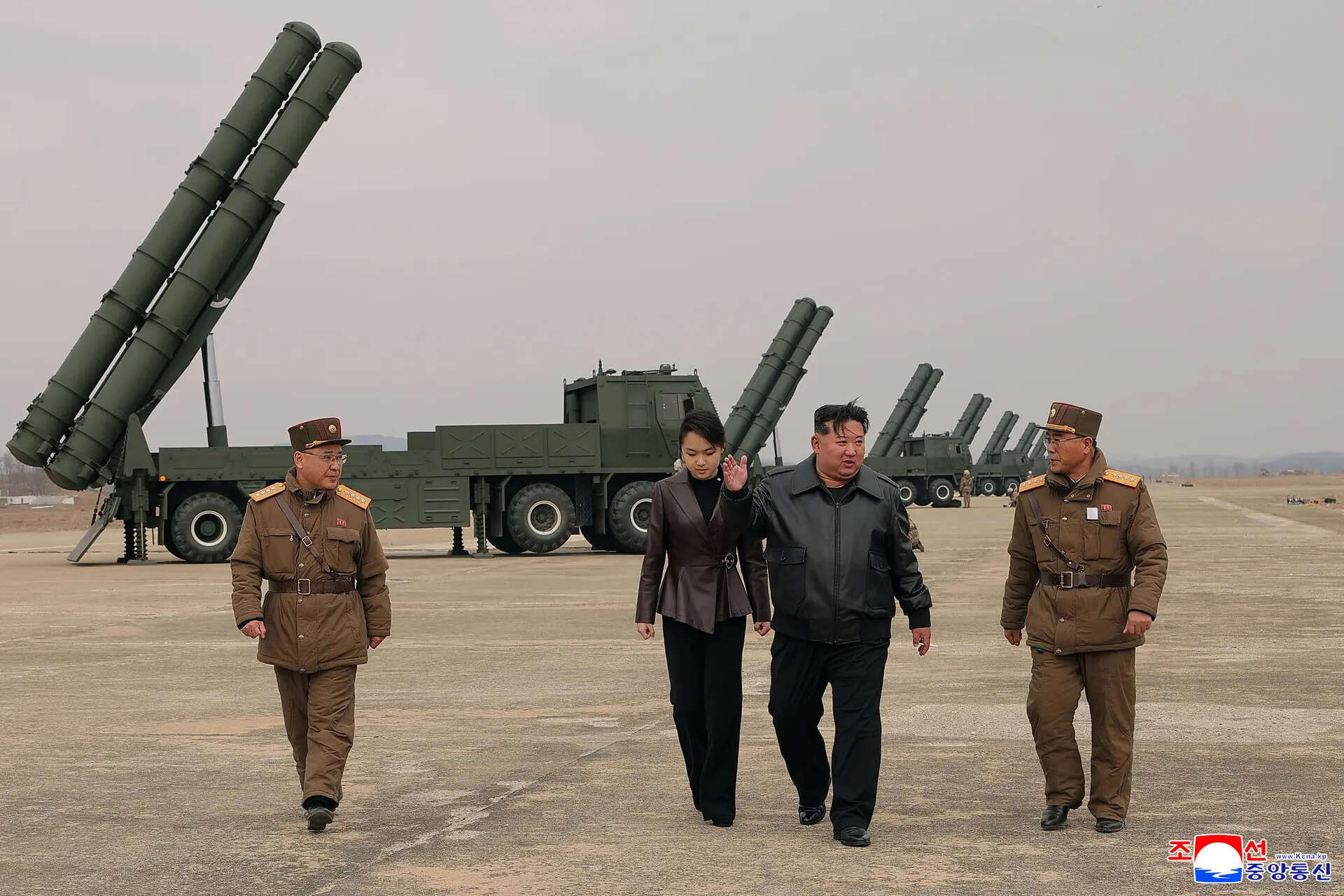
In this photo provided by the North Korean government, its leader Kim Jong Un, center right, and his daughter, center left, attend a live-fire test of multiple rocket launch systems, at an undisclosed place in North Korea Saturday, March 14, 2026. Independent journalists were not given access to cover the event depicted in this image distributed by the North Korean government. The content of this image is as provided and cannot be independently verified. Korean language watermark on image as provided by source reads: "KCNA" which is the abbreviation for Korean Central News Agency. (Korean Central News Agency/Korea News Service via AP)
In South Asia, a terrorist attack near Pahalgam in Indian-administered Jammu and Kashmir last year brought India and Pakistan to the edge of a confrontation with nuclear dimensions. The assessment credits President Trump with personally de-escalating the standoff, a claim New Delhi has flatly rejected, with the Ministry of External Affairs maintaining the ceasefire was achieved through direct, bilateral military-to-military communication.
The IC assesses that neither side currently seeks renewed conflict, but warns that "conditions exist for terrorist actors to continue to create catalysts for crises."Pakistan's missile development adds a longer-term dimension: the report assesses a trajectory that could, if it continues, produce ICBMs capable of threatening the United States, a finding that sits uneasily alongside Islamabad's recent signals of cooperation with Washington.
On the Afghan border, the situation has deteriorated into active armed conflict. On 26 February, the Taliban struck Pakistani military positions; Pakistan responded within hours by bombing Afghan border provinces and, for the first time, striking Kabul.
The fighting has continued since. Pakistan's army chief has warned that lasting peace requires the Taliban to sever ties with militants targeting Pakistan; the Taliban has called for dialogue while denying it harbours them.Europe, the assessment finds, is rearming, but doing so against a backdrop of fiscal strain, demographic pressure, and internal social tensions that complicate the effort considerably. Several EU members are carrying mounting national debt alongside anemic growth, and the continent's median age has surpassed 47, with pension systems in Italy, Germany, and much of Eastern Europe facing serious strain as retirement waves arrive with fewer workers behind them.
As of 2024, Europe hosted approximately 90 million international migrants, and the IC assesses that the lack of social integration and limited employment opportunities in some member states have made certain immigrant communities more susceptible to radicalisation, or, the report notes, they arrive having already been radicalised. Acts of terrorism, violence against women, and antisemitism among some immigrant communities are described as on the rise.
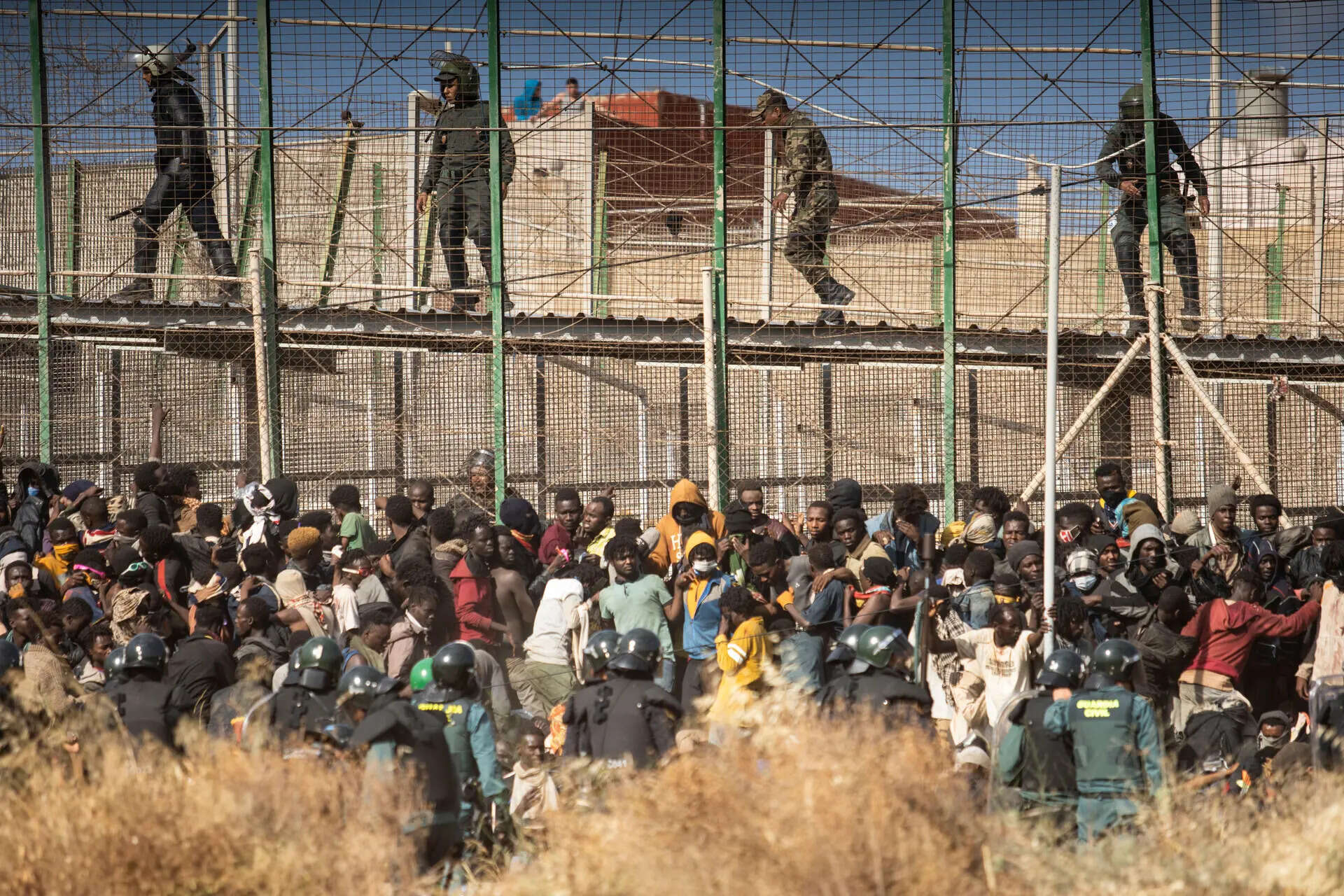
FILE - Riot police officers cordon off the area after migrants arrive on Spanish soil and crossing the fences separating the Spanish enclave of Melilla from Morocco in Melilla, Spain, on June 24, 2022. (AP Photo/Javier Bernardo, File)
Russia, the assessment notes, is actively stoking fractures across the Western Balkans, funding separatist dynamics, inflaming Serbia-Kosovo tensions, and backing Republika Srpska's push to detach from Bosnia. On a more constructive note, the report credits the US-sponsored August 2025 Peace Summit between Armenia and Azerbaijan with producing a provisional peace treaty, with President Trump's proposed transit corridor, the Trump Route for International Peace and Prosperity, offering a framework for lasting normalisation between the two countries.Africa receives pointed attention in the assessment, and the picture it draws is one of compounding strategic losses that have accumulated quietly. China-based firms now own more productive mines across the continent for five critical minerals, bauxite, cobalt, graphite, lithium, and manganese, than any other country in the world, commodities that underpin advanced weapons systems, energy storage, and the semiconductor supply chains central to the AI and quantum computing race.
Washington's engagement with the continent has been episodic at best; Beijing's has been sustained, and the gap in influence shows in the mining ledger. The jihadist footprint is expanding in parallel: al-Shabaab has encroached on Mogadishu, al-Qaeda elements in the Sahel have blockaded Bamako, and ISIS affiliates in West Africa are moving closer to cities where US personnel are present. The report also flags that Ebola and Mpox continue to emerge in new regions of the continent, diseases the IC identifies as carrying genuine spillover potential beyond Africa's borders.
The AI and quantum race
The report emphasizes that artificial intelligence is no longer merely a technology of future wars — it is already influencing targeting and battlefield decision-making in active conflicts, a development the IC describes as "a significant shift in the nature of modern warfare." The same tools generating text, images, and video for civilian use are being repurposed faster than the governance frameworks meant to contain them.
China is assessed as the most capable competitor, aiming to displace the United States as the global AI leader by 2030, with advanced semiconductors remaining the critical chokepoint, a supply chain concentrated in few enough countries that a Taiwan conflict could sever it overnight.

The first generation IRON robot by XPENG guide visitors during the XPENG AI Day held at the company headquarters in Guangzhou in southern China's Guangdong province, Wednesday, Nov. 5, 2025. (AP Photo/Ng Han Guan)
On quantum computing, the IC warns that whichever country first builds a cryptographically relevant quantum computer will gain "an extraordinary technological advantage," including the ability to break the encryption protecting financial systems, health records, and government communications worldwide.
The United States, China, the EU, Japan, and the United Kingdom are all committing billions to get there first.
No one has succeeded yet. The race is active.Underpinning both is the cyber domain, where the IC finds that China and Russia are not merely conducting espionage inside American networks but pre-positioning for potential disruption, gaining persistent access to power grids, water systems, and financial infrastructure that could be activated in a future crisis before a conventional shot is fired.
Beyond these major powers, other state actors are also leveraging cyber operations to advance their strategic goals.
North Korea, for instance, nets at least one billion dollars annually through cryptocurrency theft alone, directly funding the weapons programmes documented elsewhere in the report. Iran, despite its degraded state, demonstrated on 11 March that it retains the capacity to strike American civilian targets in cyberspace.








 English (US) ·